> For the complete documentation index, see [llms.txt](https://emca.emudhra.com/llms.txt). Markdown versions of documentation pages are available by appending `.md` to page URLs; this page is available as [Markdown](https://emca.emudhra.com/tutorials-and-guides/setting-up-root-ca-issuance.md).
# Setting Up Root CA Issuance
This section covers the setting up Root CA in emCA.
## CA Certificate Profile Creation
1. Login as an Administrator
2. Click on Manage Profiles
1. Certificate Profiles -> X509
3. Basic Information
1. Profile Type: CA
2. Profile Name: Your Root User Identifier
3. Validity: as per your CA guidelines
4. Issuing CA: Please select the corresponding issuing CA for "Self-Signed" in order to create root CA else select any existing CA in order to SUB CA.
5. Choose algorithm: Select the preferred Algorithm type.
6. Signature algorithm: Select as per your preferred algorithm type.
4. Select the DN details: These are as per your regional CA controller.
1. House Identifier
2. Country
3. Organization
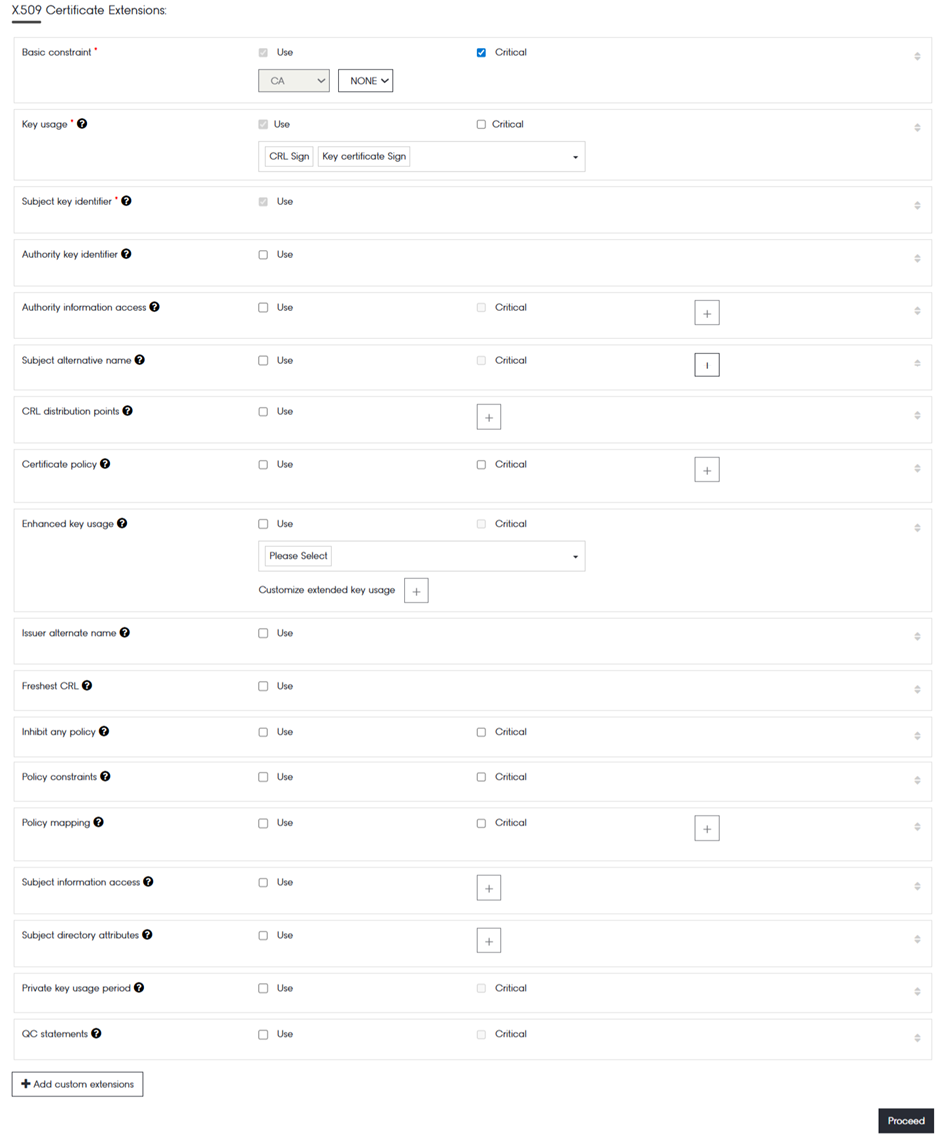
5. X509 Certificate Extensions: Select the X509 certificate extension
1. Basic constraint,
2. Key Usage,
3. Subject Key Identifier, etc.
6. Click on “Proceed” once the selection of DN details and X509 Certificate Extensions are completed.
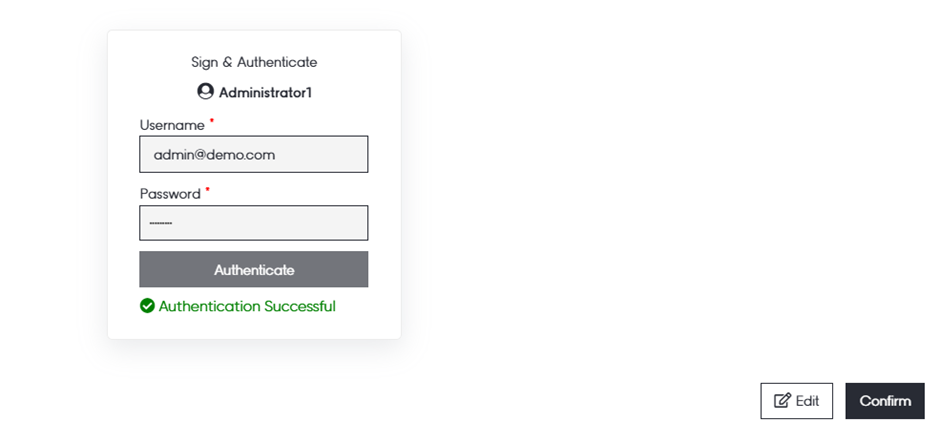
7. Authenticate as an Administrator
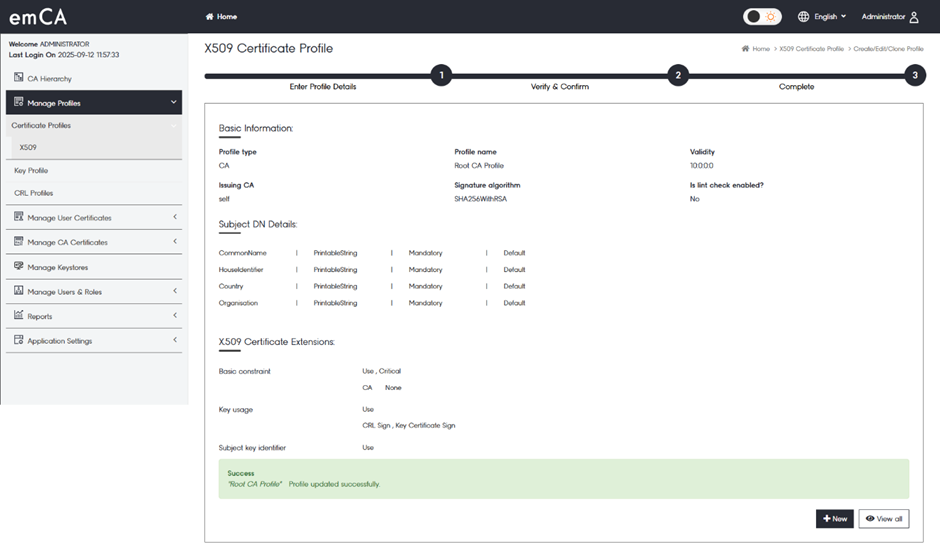
8. Issuing CA Certificate Profile will be created successfully.
## Officer Generating Key Pair
1. Login as an Officer User
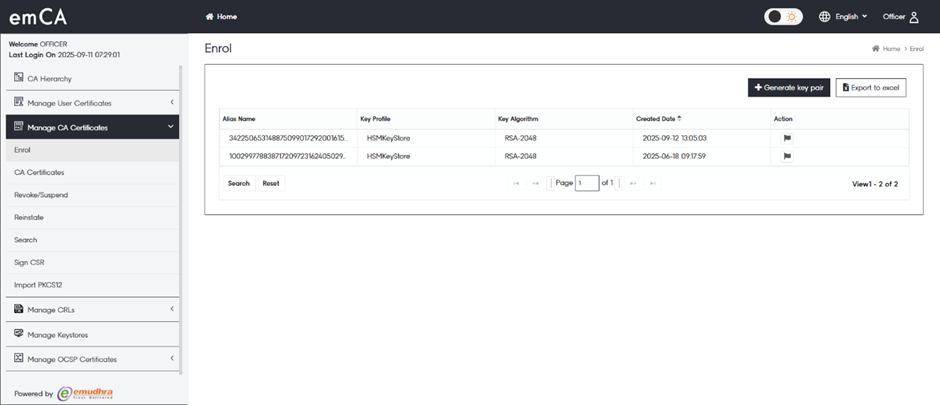
2. Click on Manage CA Certificates -> Enroll
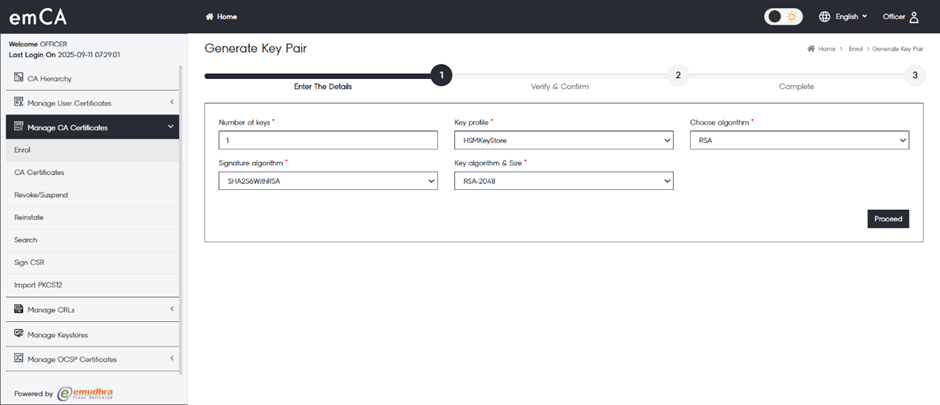
3. Generate Key Pair:
1. Select the Number of Keys
2. Key Profile: Select where you want to store the Keys
3. Chose algorithm: Select the Key pair algorithm
4. Signature algorithm: Select the signature algorithm as per the chosen algorithm
5. Key Algorithm & Size: Select the size of the Key Algorithm as per the chosen algorithm
4. Click on Proceed
5. Authenticate as an Officer
6. Click on “Generate Key Pair”
7. Key pair is generated successfully. Click on “View All” to view the crested key pair or “New” for creating a new Key Pair.
## CA Certificate Issuance
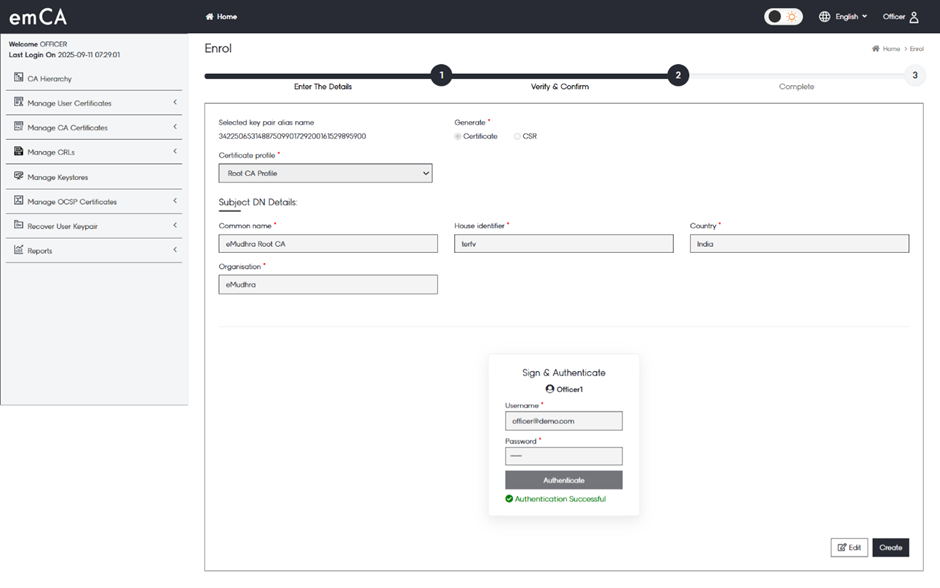
1. Click on “Action: icon” for creating the certificate using the newly generated or existing key pair.
2. Enter the Root/ sub-CA Certificate Profile DN information as Administrator configured.
3. Authenticate as an Officer and click on “Create”
4. Certificate is ready to download after successful authentication.
5. Click on “View all” to see all the issued CA certificates or “New” to create a new certificate with the key pair and CA certificate Profile.